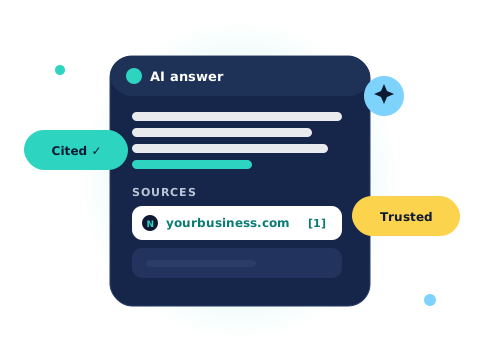
GEO (Generative Engine Optimization) is the practice of making your business easy for AI tools like ChatGPT, Gemini, Perplexity and Google AI Overviews to find, trust and cite when they write answers.
Key takeaways
- Generative AI tools write answers and often cite a handful of sources; GEO aims to make your business one of them.
- Clear, factual, well-structured content is easier for AI to quote than slogans.
- Consistent business details and mentions on trusted sites build the trust AI tools look for.
- GEO works best together with SEO and AEO, not instead of them.
Search used to end with a list of links. Today, more customers get a written answer from an AI tool, sometimes with a few sources listed underneath. Generative Engine Optimization (GEO) is how you make sure your business is part of that answer, and one of those sources.
What GEO means
Generative AI tools such as ChatGPT, Gemini, Perplexity and Google’s AI Overviews read information from across the web and write a summary answer. When they do, they may mention businesses, quote facts and link to the pages they relied on. GEO is the work of making your website and online presence easy to find, easy to trust and easy to quote for these tools.
GEO, SEO and AEO
- SEO (Search Engine Optimization) helps your pages rank in search results.
- AEO (Answer Engine Optimization) gives AI assistants clear, direct answers to specific questions, often through FAQs and structured data.
- GEO (Generative Engine Optimization) helps your business get cited and summarised when AI tools write longer answers.
They overlap heavily. A fast, well-structured site with clear answers and a strong reputation supports all three.
How AI tools choose what to cite
Each tool works differently, and none publishes an exact formula. In general, they favour sources that are easy to read and easy to verify: pages with clear, specific facts, consistent information across the web, and signs that other trusted sites and real customers vouch for the business.
Six steps to improve your GEO
- State the facts plainly. Say what you do, where, for whom and how, in simple sentences an AI tool can lift directly.
- Structure every page. Use clear headings, short paragraphs, lists, FAQs and a short summary at the top.
- Add structured data. Organization, Service, Article and FAQ schema help machines connect your content to your business.
- Keep your details identical everywhere. Business name, website, email and services should match on your site, listings and social profiles.
- Earn mentions on trusted sites. Directories, associations, partners, local news and industry lists are the sources AI tools learn from.
- Publish useful, original content. Practical guides, real examples and your own insights give AI tools something worth citing.
How to measure GEO
Ask the AI tools your customers use the questions they would ask, and note whether your business is mentioned or linked as a source. Repeat monthly, because answers change. In Google Analytics, watch for visits referred by AI tools, and track whether those visitors become leads.
Frequently asked questions
Is GEO different from AEO?
They overlap. AEO focuses on clear, direct answers to specific questions; GEO focuses on being cited and summarised in longer AI-written answers. We handle both together with SEO.
Can I pay to be cited in AI answers?
You cannot pay to be cited in organic AI answers. Some AI platforms offer separate, labelled ad placements, but those are different from earned citations.